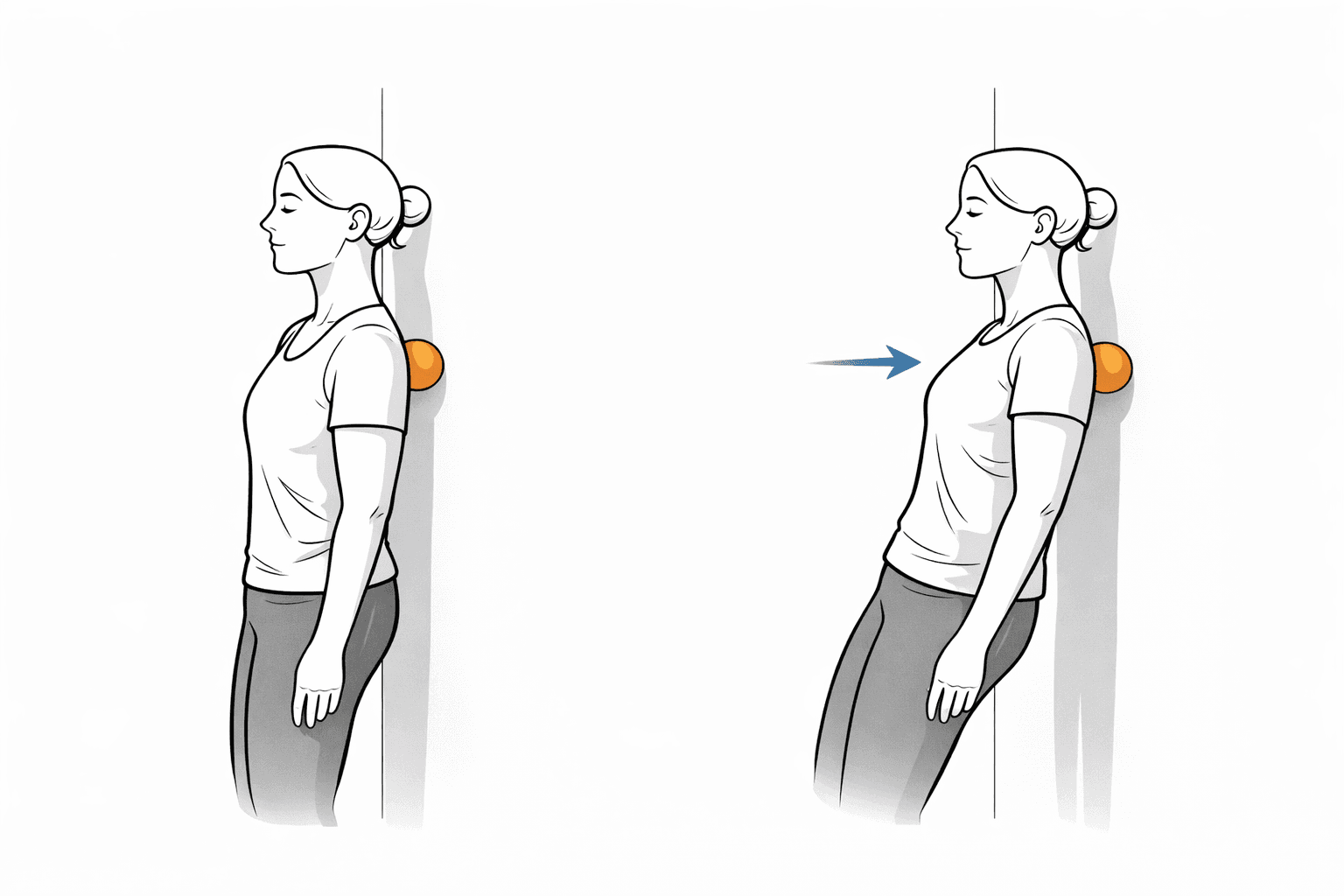
This is a simple “pressure + breathing” drill for upper-back tightness. It’s meant to feel relieving — not like you’re digging into a bruise.
Quick relief (2–4 minutes)
Do this now
- Place a ball between your upper back and a wall (slightly off the spine).
- Find a “good spot” and hold 20–40 seconds while taking slow breaths.
- Move to 1–2 nearby spots and repeat.
Keep it comfortable
- Mild pressure (3–5/10)
- Long exhales
Detailed guide
Goal
Reduce upper-back tension by relaxing trigger points with gentle, steady pressure.
When it helps
- Tight spots between shoulder blade and spine
- Upper-back tension from posture or stress
- “Knots” that feel better with mild pressure
When to skip / be careful
- Sharp pain, tingling into the arm, or symptoms that worsen
- Bruising or skin sensitivity
- Rolling directly on bones/spinous processes
Setup
Use a massage ball or tennis ball and a wall (or the floor if you prefer). The wall is easier to control pressure.
Steps
- Place the ball between your upper back and the wall, slightly to the side of the spine.
- Lean into it gently until you find a “good spot” (mild pressure, not sharp pain).
- Hold pressure and take 4–6 slow breaths (20–40 seconds).
- Make tiny movements (1–2 cm) to explore nearby tissue if it feels good.
- Move to 1–2 more spots, then finish.
How it should feel
- Pressure that you can breathe through
- Relief or warmth after you step away
If it feels sharp or causes nerve-y symptoms, stop and choose a different area.
Cues
- Gentle pressure only (3–5/10)
- Stay off the spine and shoulder blade edge
- Long exhales help the muscle let go
Common mistakes
- Pressing too hard and tensing up
- Staying on one spot too long with high pressure
- Chasing pain instead of relief
Dosage
- 2–4 minutes total
- 1x/day as needed